Sunday was devoted to Iznik, one of the great places to visit in Turkey. Iznik was the older Nicea (of the Nicene creed fame) and has a storied history. It is located at the eastern end of Iznik lake, less than an hour drive from Gemlik. But before we could reach Gemlik, we had other activities. Upon checking out of the Atamer Hotel we found one of our tires was flat. This was the same tire that had been low a week or so before and gotten pumped up. Yunus arrived as we were to have breakfast at his house and we limped on three tires to the nearest gas station. They pumped the tire up and we went to his apartment for breakfast having called Hakan who promised to find a solution to the tire repair.
 |
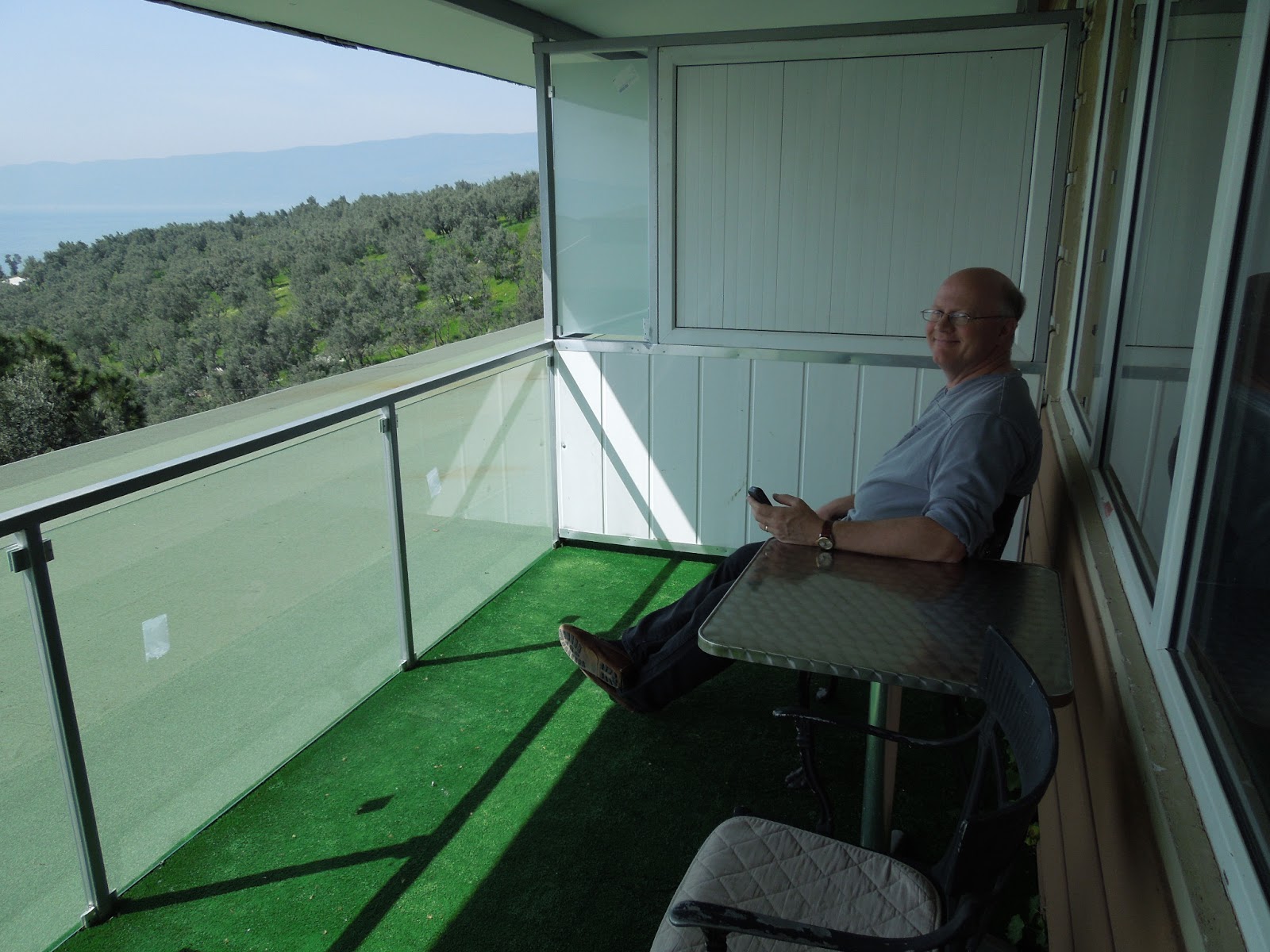
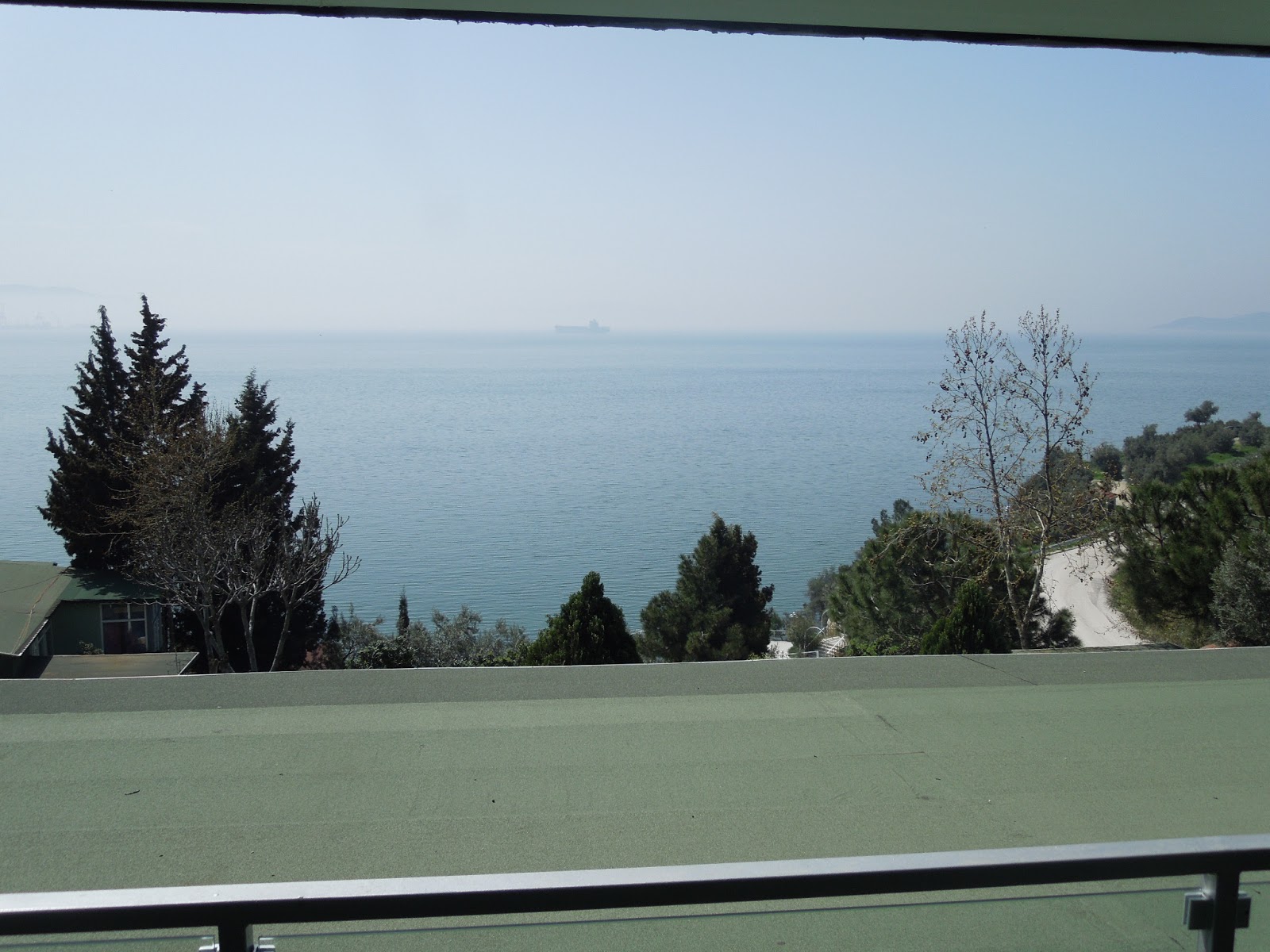
| Morning views from our room at the Atamer Hotel in Gemlik |
 |
| Gemlik Spor, the local football team, was also staying there |
Yunus turned out to be an amazing breakfast cook (by the way, you single ladies out there, Yunus is single and is looking for that special woman). He turned out a feast of eggs with sucuk, cheeses and olives, grilled cheese (peynerli tost as it is known here), breads with homemade strawberry jam (from his Mom - he is not that devoted to the kitchen), tomatoes and cucumbers, cereal, and this really special lamb stuff. In Batman (his hometown) they preserve the lamb meat by cooking it with fat in small bits. Yunus fried this up on the stove and it is spectacular if way too rich.
 |
| View from Yunus's large and modern apartment |
 |
| The chef at work |
 |
| The amazing lamb bits from Batman |
 |
| Randy waits expectantly for his eggs and sucuk |
 |
| Yunus sure knows how to make a breakfast! |
Thus fortified we drove to the Gemlik town and met Hakan. He had located a local tire repair shop and we went there. The guy found a nail in the tire (of course!) and fixed it within 10 minutes for the sum of 10 lira (which Hakan insisted on paying). Then, we were off!
 |
| The lastik (tire) repair shop in Gemlik |
Hakan stopped at a nearby town with great views over Gemlik and the monument to the third Turkish Republic President, Celal Bayer. This town, Umberbey, was his home. We then took the road along the north side of Lake Iznik. Our guide for the day was the erudite and meticulous John Ash. We stopped first about five kilometers north of Iznik and followed the signs to Elbeyli. Our quest was Bestas, or five stones. This unusual and impressive monument was a Roman funerary monument and sits in the middle (literally) of an olive grove. On the way from there to Iznik we also stopped at an underground tomb that is early Byzantine. It supposed to have wonderful frescoes but alas was closed for renovation.
 |
| Hakan, Alice and Yunus at Umberbey |
 |
| Same place but with Randy in the middle |
 |
| The really ugly memorial to Celal Bayer in Umberbey |
 |
| Bestas (Five Stones) in Elbeyli |
 |
| This amazing monument is in the middle of olive fields |
 |
| It is literally five stones on top of each other - apparently the sixth and top stone was lost long ago |
 |
| Alice enjoys the sight and the beautiful day |
 |
| Yunus felt at home here too |
We reached Iznik and stopped at the Istanbul Gate, the northern most gate of the city walls. This consists of three gates in succession and was interesting. Next we went to the southwest part of town and parked at the Camlik Hotel along the gate. This was the start of our walking tour as suggested by John Ash. We followed his suggestions in order after stopping by the lakeside for the obligatory tea. The Iznik Foundation was closed (this being Sunday) so we could not see them doing tile work but we found the Saray (Palace) Gate and then the stadium (also closed for renovation). The walk was great because the town is flat and compact and the area away from the central street is pretty and has yards and even the odd chicken or rooster.
 |
| Recycling of ancient carvings into the Istanbul Gate of Iznik |
 |
| Part of the Istanbul Gate |
 |
| The middle of three gates - quite formal carvings |
 |
| The inner gate features scary masks at either side |
 |
| The other side - I guess this was to scare people away from entering Iznik from Istanbul? |
 |
| The lakeside |
 |
| Yunus relaxes with tea before the ordeal of the walking tour |
 |
| Randy carried my burdensome purse - here by the closed for renovation Roman theater which sat 9000 |
Next on the tour was the mosque of Mahmut Celebi. This dates from 1443 and it is nothing special (see how jaded we have become). Afterwards we visited the Aya Sofia (this is the Iznik version). Last time we were in Iznik (2008) the entire church was closed for renovation. It is now complete and (thanks to the current religious government of Turkey) also a rather awkward mosque. This site was the site of the Nicene creed but the church is newer, dating from around 1000. It was a mosque also during the Turkish conquest. It was fairly crowded with sightseers.
 |
| The Aya Sofia of Iznik - on this site the Nicene Creed was developed - did I say we were visiting on Easter Sunday? |
 |
| Now a working mosque with a middle part devoted to the mosque function, quite awkwardly I think |
 |
| A portion of the original mosaic floor remains |
 |
| Frescoes are still visible |
 |
| Frescoes of the Holy Family, etc. |
 |
| The church/mosque with the raised mosque portion in the middle. We could walk around the outer sides easily and didn't have to take off our shoes to do so |
We were then in the central part of the town and walked east to see the Mosque of Haci Ozbek. This dates from 1333 and according to John Ash is the oldest Ottoman mosque that can be dated with any certainty. It is small but quite charming in its simplicity. Next to it is an old Islamic complex with small park and tombs. We went down a side street to the Medrese (school) of Suleyman Pasa. This was interesting from an architecture perspective as it formed the ideal for future Ottoman medreses. It has been turned into a set of small shops with artists selling their versions of Iznik ceramic wares (Iznik of course is renowned for its ceramics and tiles since the 1500's and was especially famous for its red color). We bought some stuff which was surprisingly well priced and especially liked one shop where the owner and artist was a good looking and friendly lady. She seemed to take an interest in Yunus and they have been texting since (how romantic!).
 |
| Interior of the simple and small but charming Mosque of Haci Ozbek |
 |
| Exterior of this small gem |
 |
| A nicely tiled nameplate, appropriate for the world famous home of tile, Iznik |
 |
| The interesting chimney caps on the roof of the Suleyman Pasa Medrese |
 |
| Now a nicely done artist shop area |
 |
| The vivacious and lovely shop owner / artist who took a liking to Yunus |
 |
| In the Medrese courtyard (Randy still carrying my big orange purse) after I was torn away from shopping |
Next was the central sights of the Green Mosque and the town museum located in the Imaret (soup kitchen) of Nilufer Hatun. We had seen the museum before and as the day was getting on, we skipped that. We did visit the beautifully done Green Mosque and then headed for the eastern most gate, the Lefke Gate. We walked around there (John Ash recommended a short walk to some nearby tombs but we have left that for another visit) and then followed the remarkably well preserved city walls along the south side of the town to reach our car at the Camlik Hotel. In need of medicinal rehydration, we sat at the Camlik's outdoor restaurant by the lake and downed some restorative Efes beers while Hakan drank Coke.
 |
| The Green Mosque of Iznik |
 |
| The minaret is the best part though the tiles are not original |
 |
| Nice stone carving detail in the front |
 |
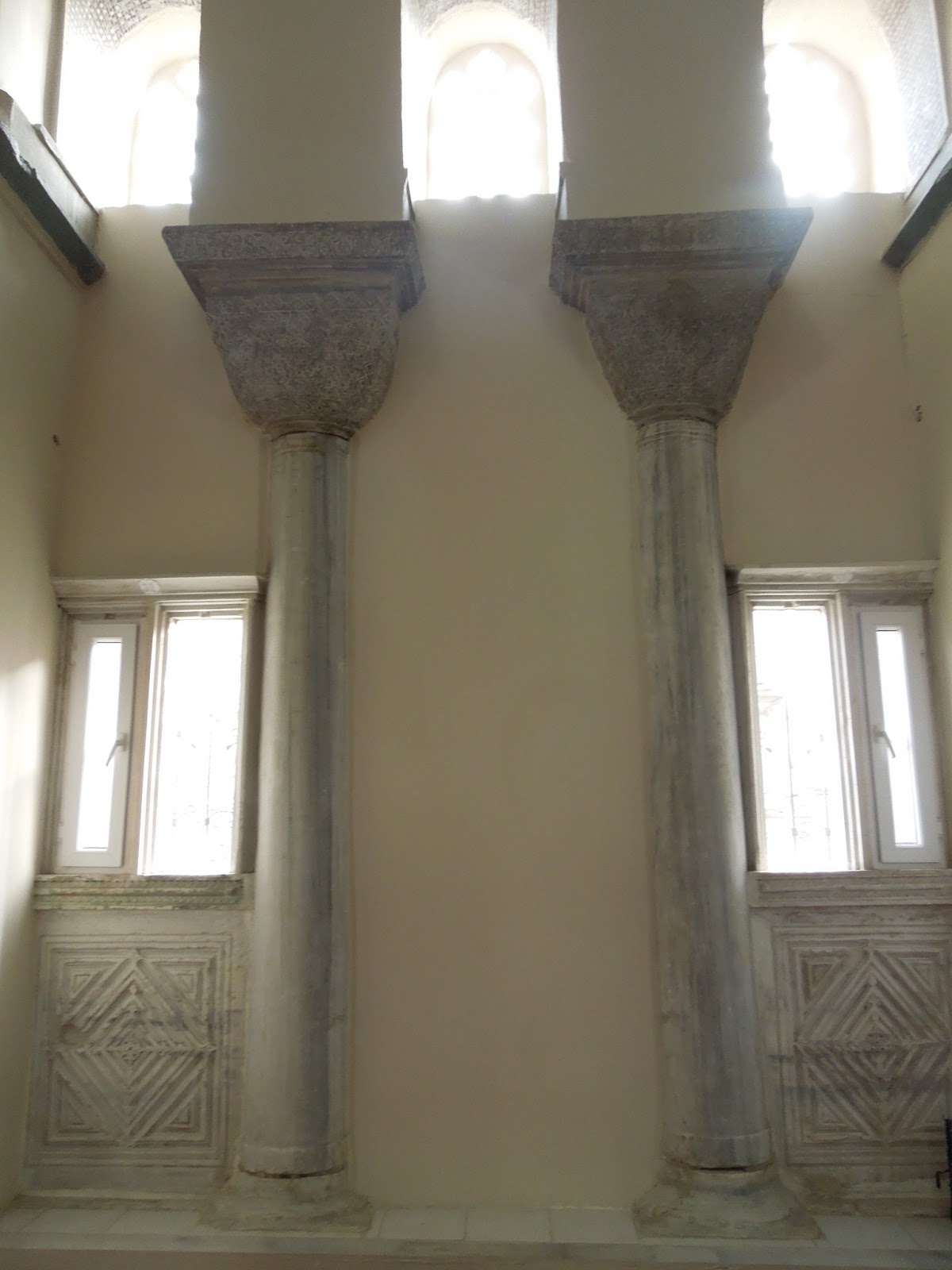
| Reused columns (of course) inside |
 |
| The Lefke Gate on the eastern side |
 |
| Gate detail |
 |
| The series of entrances making the Lefke Gate |
 |
| Recycled column and frieze bits |
 |
| Yunus climbed the well preserved aqueduct at the Lefke Gate |
 |
| A stretch of the well preserved Iznik city walls along the south side of the town (a sight John Ash calls "one of the grandest sights in Turkey." |
 |
| Hakan stuck with Coke but Yunus, Randy and Alice each downed two big Efes's in the name of hydration |
 |
| We earned our lakeside libation after the hours of walking to see all that Iznik has to offer |
 |
| The lake just before sunset |
A final drive out the Lefke Gate led up a hill to the tomb of Abdulvahap. The tomb was not interesting but there were a lot of people there mainly to enjoy the spectacular view. I asked Hakan to take the road along the south side of the lake back to Gemlik. The road is not as good as the one on the north side but it is more picturesque and I like it better. We were supposed to see the Konak olive groves (a quest I have wished for for nearly 20 years) but it was getting dark and that will have to wait for a future visit.
 |
| The gaudy tomb of Adbulvahap who kept fighting supposedly even though his head was cut off, and then buried himself |
 |
| Yunus liked Iznik for multiple reasons |
 |
| Hakan and Alice enjoy the view over Iznik town and Lake Iznik |
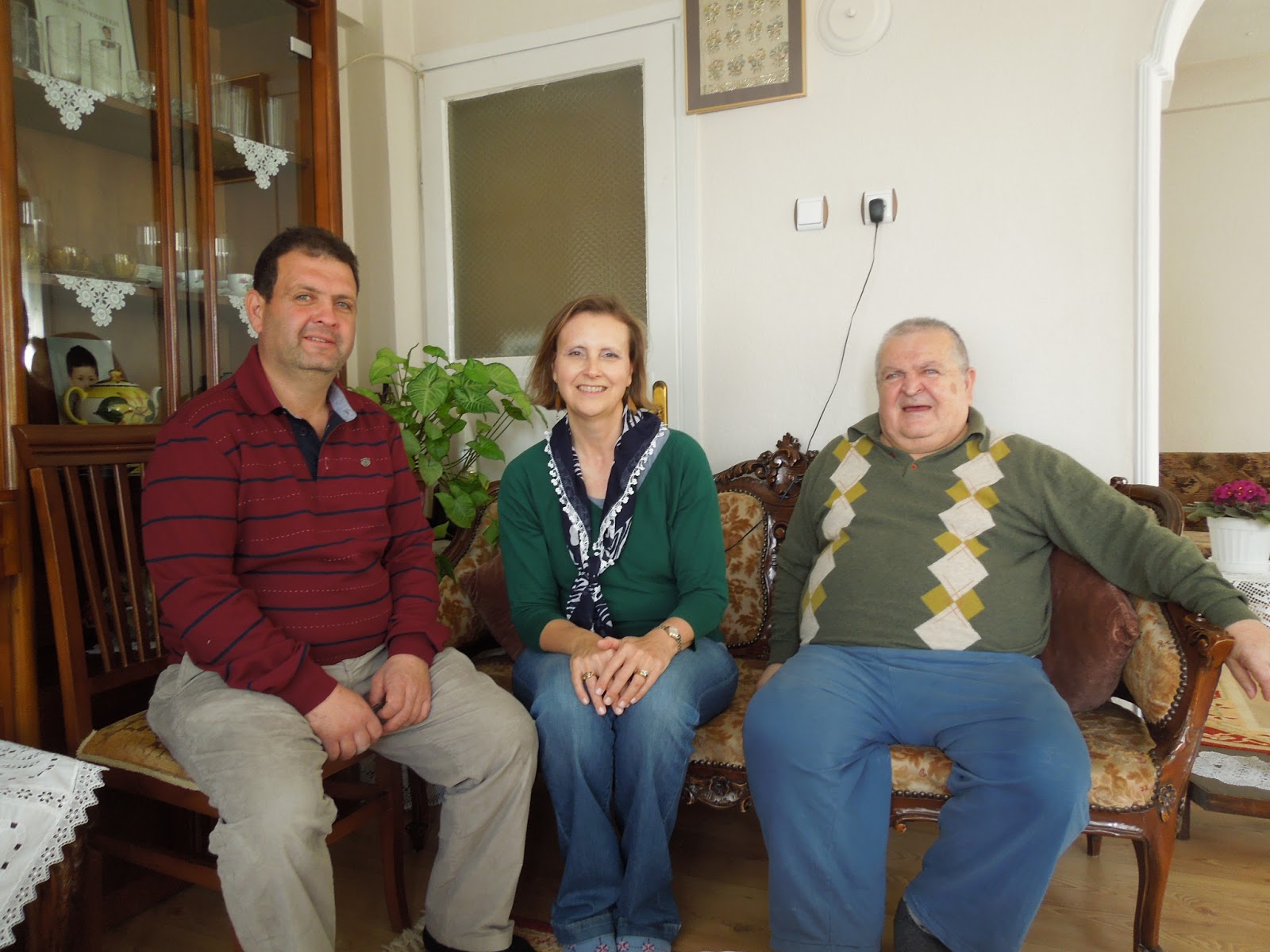
Leyla Hanim was waiting for us at Casa Konak with manti (yum!). We had a relaxed and delicious meal en familie and then said our goodbyes. The Konaks sent us away with their own green and black olives, olive oil and handmade olive soap. We were headed to Bursa, about a half hour drive, and that forms the last part of our weekend sojourn.
 |
| The delicious soup as a first course at Casa Konak |
 |
| A family gathering including master cook Leyla Konak (in white scarf) |
 |
| The manti was perfect - big like I like them! |
|
|